March 9, 2026
Cyber-Safety in 2026: Essential Digital Habits for SG Kids
From scams to social media pressure, cyber risks are evolving. Learn key cyber-safety habits and digital wellbeing tips every SG parent needs in 2026.
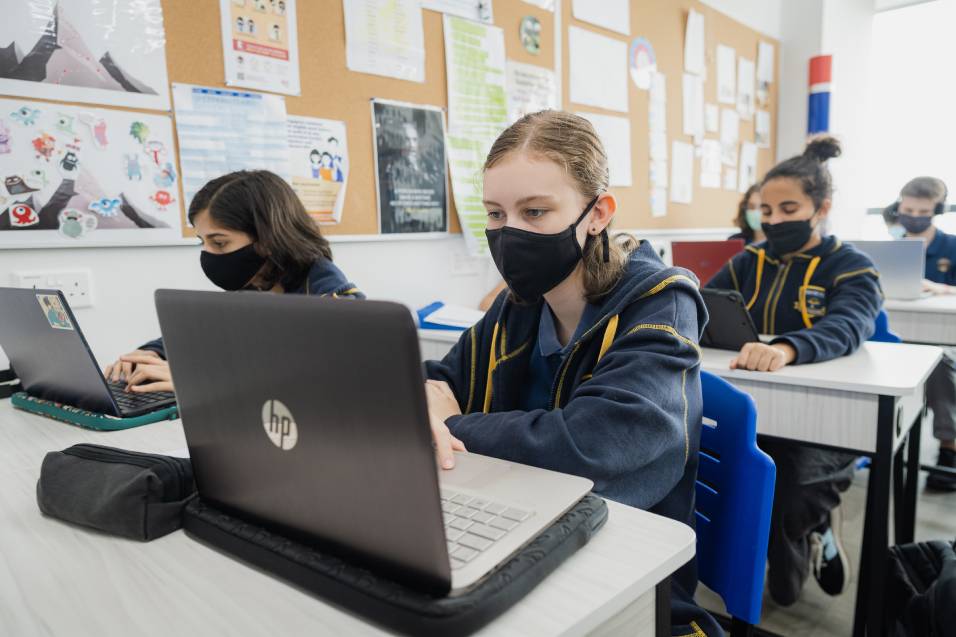
From scams to social media pressure, cyber risks are evolving. Learn key cyber-safety habits and digital wellbeing tips every SG parent needs in 2026.
Cyber-safety used to be about telling children, “Don’t talk to strangers online.”
But in 2026, the digital world looks very different. Children are not just playing games or watching videos anymore. They are chatting in group messages, using AI tools for homework, joining online communities, and spending time on platforms that evolve faster than most parents can keep up with.
With schoolwork increasingly supported by digital devices, and social interaction often happening online, cyber-safety has become less about one-off rules and more about daily habits. The good news is that children do not need to fear the internet to be safe. They simply need strong routines, clear boundaries, and guidance that grows with them.
This matters even more for parents choosing primary and secondary international schools in Singapore, where digital learning tools are often part of everyday classroom life.
Here are the essential digital habits every Singapore parent should focus on in 2026, whether your child is in primary school or preparing for secondary years.
1. Teach Kids to Pause Before They Click
One of the most important online habits today is the ability to slow down. Many cyber risks rely on speed. Clicking a suspicious link, reacting emotionally to a message, or sharing personal details without thinking often happens in seconds.
Children should learn a simple rule: Pause, check, then decide.
This applies to:
- Unknown links in WhatsApp or Telegram groups
- Pop-up ads in games
- “Free reward” messages
- Fake social media giveaways
- Emails that look like school announcements
Encourage your child to treat the internet like a busy road. Even if it looks safe, they should stop and check before crossing.
A simple habit like this reduces the chance of falling for scams, phishing attempts, or inappropriate content.
2. Build Strong Password Habits Early
Passwords are still one of the weakest points in digital safety, even in 2026. Many children use simple combinations like their name, birth year, or “123456”. Some even share passwords with friends as a sign of trust.
Parents can help by teaching two key habits early:
Use passphrases instead of passwords
A phrase like BlueTigerRunsFast2026! is easier to remember and harder to guess than a short password.
Never reuse passwords
If one account is hacked, reused passwords make it easy for hackers to access everything else, from email accounts to learning apps.
For older children, password managers can also be introduced as a practical life skill, especially as they start managing school portals, learning platforms, and communication tools.
3. Normalise Talking About Online Discomfort
A major challenge for parents is that children often do not report online issues until it becomes serious. They may feel embarrassed, scared of losing device privileges, or unsure whether they did something wrong.
That is why cyber-safety needs to feel like an ongoing conversation, not a punishment system.
Instead of asking, “Did anything bad happen online?” try asking:
- “Did anything online feel weird today?”
- “Did anyone send you something confusing?”
- “Have you seen anything you wish you could unsee?”
Children are more likely to open up when the tone feels calm and supportive.
This is also where parental involvement in education plays an important role. When parents stay engaged with what children are learning and doing online, children feel safer seeking help when something does not feel right.
4. Teach Kids to Spot Manipulation, Not Just Strangers
In the past, online danger was often framed as strangers trying to contact kids. Today, the bigger risk is manipulation.
Children may encounter:
- Fake profiles pretending to be teenagers
- Influencers promoting unhealthy or risky behaviour
- Peer pressure in private group chats
- AI-generated messages designed to sound real
- Edited photos that distort reality and self-image
The goal is not to make kids paranoid. The goal is to teach them that not everything online is what it appears to be.
A useful mindset to teach is:
“If someone is rushing you, pressuring you, or asking you to hide something, it is a red flag.”
This applies not just to strangers, but also to people they already know.
5. Set Up “Safe Sharing” Rules at Home
Many parents tell children not to share personal information online, but children often do not know what counts as “personal”.
In 2026, kids may accidentally share details through:
- Their school uniform in photos
- Screenshots showing their class name
- Location tags in Instagram stories
- Background details in videos
- Photos of student cards or certificates
Create a simple family rule list, such as:
- Never share your full name publicly
- Never show your home address
- Never reveal your school schedule
- Ask before posting photos with friends
- Do not share passwords, even with classmates
These rules are especially important as children grow older and start using social platforms more actively.
6. Create Screen Boundaries That Focus on Balance
Screen time conversations often turn into arguments because children feel like parents are simply trying to control them. But the real goal is balance.
Instead of banning screens completely, parents can guide children towards healthier routines such as:
- No devices during meals
- A fixed “charging station” outside bedrooms
- A screen-free hour before bedtime
- Short breaks after long study sessions
- Outdoor time or sports as a daily non-negotiable
Cyber-safety is not just about avoiding online danger. It is also about protecting mental wellbeing, sleep quality, and attention span. When children learn balance early, they are less likely to form unhealthy screen habits later.
7. Teach Kids to Think Critically About AI Content
AI tools are now part of everyday life, and many children use them to summarise notes, generate ideas, or complete assignments.
While AI can be useful, children need to understand two important truths:
- AI can be wrong
- AI can sound confident even when it is incorrect
Parents should encourage children to treat AI like a helpful assistant, not a source of truth.
A good habit is asking:
- “Where is this information coming from?”
- “Can I verify this using a trusted source?”
- “Does this sound realistic?”
This is a crucial digital habit for students, especially as academic expectations increase in upper primary and secondary levels.
8. Use Parental Controls, But Do Not Rely on Them Alone
Parental control apps can be helpful, but they are not a complete solution. Many children eventually learn how to bypass restrictions, especially as they get older and more tech-savvy.
Parental controls work best when combined with trust and communication. They should be positioned as a safety tool, not surveillance.
Some practical controls parents can set include:
- Content filters for younger children
- Restrictions on in-app purchases
- Screen time scheduling
- Blocking unknown downloads
- Monitoring location sharing settings
The best long-term protection is still a child who understands how to stay safe independently.
9. Help Kids Build a Positive Digital Identity
Cyber-safety is not only about avoiding harm. It is also about teaching children how to use technology responsibly and confidently.
A child’s online presence can follow them for years. Even casual posts or comments can shape their reputation later.
Encourage your child to ask before posting:
- “Would I be okay if my teacher saw this?”
- “Would I be okay if this stayed online forever?”
- “Does this represent who I want to be?”
These questions help children develop maturity and self-awareness, which are essential traits for future digital leadership.
How Invictus International School Supports Safe Digital Habits
In today’s learning environment, technology is no longer an optional add-on. It is part of how students explore, create, and communicate.
At Invictus International School, students develop essential digital habits through meaningful technology integration, including the use of iPads, laptops, coding activities, digital research, and creative learning through tools including 3D printers.
To ensure students learn in a safe and supportive environment, technology access is also thoughtfully managed. In primary years, students have access to laptops or tablets for dedicated digital literacy lessons and as tools to research, create and communicate, yet screen time is carefully monitored for our younger learners to help manage eye strain and maintain a balanced learning experience. Most primary school lessons are geared towards hands-on learning since research shows that memory and attention span are strengthened when children learn from experiences that stimulate their senses in the real, rather than the virtual world.
As students transition into lower secondary school, they are required to bring their own laptops, ensuring they have the consistent tools necessary for more advanced research and study in different subject areas, as well as to create and collaborate on projects. Invictus also promotes responsible online citizenship through curriculum-based guidance and digital wellbeing discussions taught through digital literacy and PSHE (personal, social and health education). Online safety sessions for students and parents further support families in understanding online risks, digital boundaries, and parental controls.
With IT teams monitoring school devices, students are able to explore technology confidently while staying protected in an age-appropriate digital space.
Conclusion: Raising Digitally Smart Kids in 2026
Cyber-safety in 2026 is not about raising children who fear the internet. It is about raising children who understand it. With the right habits, kids can enjoy technology while staying safe, confident, and in control of their digital lives.
The most effective approach starts early, grows with the child, and combines boundaries with open communication. When parents stay involved and children feel supported, cyber-safety becomes a natural part of everyday learning and life.
Looking for a school that nurtures both academic excellence and responsible digital learning? Explore how Invictus International School equips students with future-ready skills through technology-supported education and strong digital citizenship values. Visit Invictus International School to learn more and book a school tour today.
An Institution by Sing-Ed Corporation.
© 2026 Invictus International School. All Rights Reserved.