March 16, 2026
Parental Language Guilt: Supporting Your Bilingual Child in SG
Feeling guilty you’re not bilingual? Learn practical ways to support your child’s Mandarin learning and confidence through a bilingual programme in Singapore.
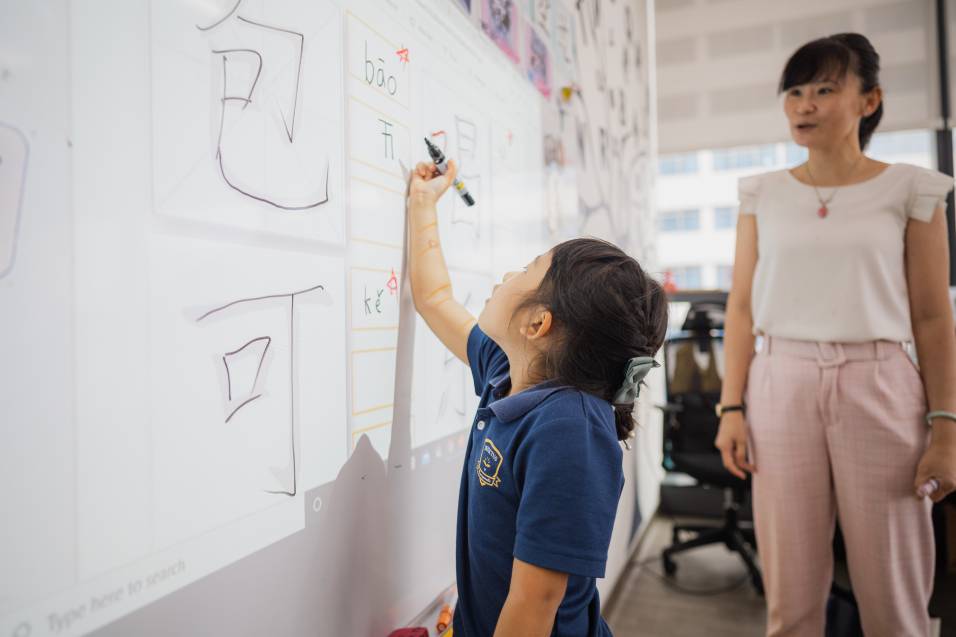
Feeling guilty you’re not bilingual? Learn practical ways to support your child’s Mandarin learning and confidence through a bilingual programme in Singapore.
Maybe your child is happily greeting relatives in Mandarin while you stand slightly on the side, smiling and nodding. Maybe your child’s school sends home Chinese vocabulary lists, and you find yourself wondering if you are doing enough. Or maybe you have heard your child switching between English and Mandarin and thought, “Am I failing them if I can’t support this?”
If you have ever felt that pang of guilt because you are not bilingual, you are not alone. In fact, parental language guilt is one of the most common concerns among modern families, especially in a country where bilingualism is deeply tied to culture, identity, and opportunity.
The good news is this: you do not need to be fluent in Mandarin to raise a bilingual child. What your child needs most is not perfection, but support, encouragement, and consistency.
1. Shift the Goal: From “Perfect Fluency” to “Positive Exposure”
One of the biggest mistakes parents make is thinking bilingualism is an all-or-nothing achievement.
But bilingual children often develop unevenly. Some may understand Mandarin well but speak it less confidently. Others may speak casually at home but struggle with formal vocabulary in school.
Instead of aiming for perfect fluency, aim for:
- Familiarity
- Confidence
- Consistent exposure
- Willingness to communicate
If your child is willing to try, you are already doing something right.
2. Use Daily Life as Language Practice (Without Making It Feel Like Homework)
Even if you are not fluent, you can still create routines that keep Mandarin present in your home. For example:
- Play Mandarin songs during breakfast
- Watch cartoons in Mandarin with subtitles
- Read bilingual storybooks together
- Use basic Mandarin phrases at home (“吃饭”, “谢谢”, “晚安”)
- Label objects around the house with sticky notes
- Encourage grandparents to speak Mandarin regularly
Your role is not to teach every word. Your role is to create an environment where Mandarin feels normal.
3. Let Teachers and Schools Do the Heavy Lifting (That’s What They’re There For)
Many parents assume they must personally teach Mandarin at home. But in reality, your child’s teachers are trained to guide language development step by step.
A strong bilingual programme in Singapore is designed to support children of all backgrounds, including families where one or both parents may not speak Mandarin fluently at home.
The key is choosing a school environment where Mandarin is not treated as a stressful subject, but as part of everyday communication, culture, and confidence-building.
4. Encourage Conversations, Not Corrections
If you are not fluent, it can be tempting to stay quiet or avoid Mandarin altogether. But even if you are unsure, your encouragement can shape your child’s confidence.
Instead of correcting every mistake, focus on connection.
You can say things like:
- “That’s great, can you teach me that word?”
- “I love how you tried speaking Mandarin.”
- “Let’s learn together.”
- “Can you say it again? I want to remember it.”
When a child feels supported, they are more likely to keep practising.
5. Use Technology Wisely (It Can Be Your Secret Weapon)
If you feel guilty about not knowing Mandarin, technology can help bridge the gap in a way that feels effortless.
There are many tools that support Mandarin development, such as:
- Audiobooks in Mandarin
- Chinese learning apps for kids
- Storytelling YouTube channels
- Mandarin songs and rhymes
- Interactive games with listening practice
Even translation apps can help you participate. You may not understand everything, but you can still engage with what your child is learning. A small effort like listening together on the way to school can make language learning feel natural rather than forced.
6. Make Peace With “Mixed Language” (It’s Normal)
Many parents worry when their child mixes English with Mandarin.
But this is extremely common in bilingual children, especially in Singapore. It is not a sign of confusion. It is often a sign that their brain is actively working with two language systems.
Instead of saying, “Don’t mix languages,” try:
- “That’s good. Do you know how to say the full sentence in Mandarin?”
- “Let’s try saying the whole thing in Chinese.”
- “What’s the Mandarin word for that?”
Gentle guidance works far better than criticism.
7. Focus on Consistency, Not Comparison
It is easy to compare your child to others.
Maybe another child speaks Mandarin confidently. Maybe a cousin is taking Higher Chinese. Maybe you feel behind. But bilingual development is not a straight line. It depends on exposure, personality, confidence, and even social environment.
Some children bloom early. Others develop stronger Mandarin skills later, especially when they find personal meaning in the language. Your child’s journey does not need to match anyone else’s timeline.
How Invictus International School Supports Bilingual Learners
At Invictus International School, we recognise that many families want bilingual education, even if parents may not personally speak Mandarin fluently at home.
At our Centrium Square campus, language learning is thoughtfully integrated into everyday classroom experiences through our bilingual programme. This allows students to build Mandarin confidence naturally through structured learning, meaningful exposure, and daily practice.
Our approach supports children not only academically, but also socially and culturally, helping them develop multilingual, globally-minded students who feel comfortable communicating across different environments.
Conclusion: You Don’t Need to Be Bilingual to Raise a Bilingual Child
Parental language guilt is understandable, especially in a multicultural society like Singapore. But your child’s bilingual journey is not dependent on your fluency. What matters most is the environment you create: one filled with encouragement, exposure, consistency, and pride. With the right support from family and school, your child can grow into a confident bilingual learner, even if you are learning alongside them.
If you are exploring an international education pathway that also values language development, Invictus International School offers a supportive learning environment where Mandarin learning is nurtured with intention. Book a school tour and discover how our Centrium Square campus supports bilingual learning.
An Institution by Sing-Ed Corporation.
© 2026 Invictus International School. All Rights Reserved.