April 27, 2026
What a School Day Looks Like at an International School
Thinking of enrolling your child in an international school? Get a glimpse into a typical school day and how it shapes confident, curious young minds.
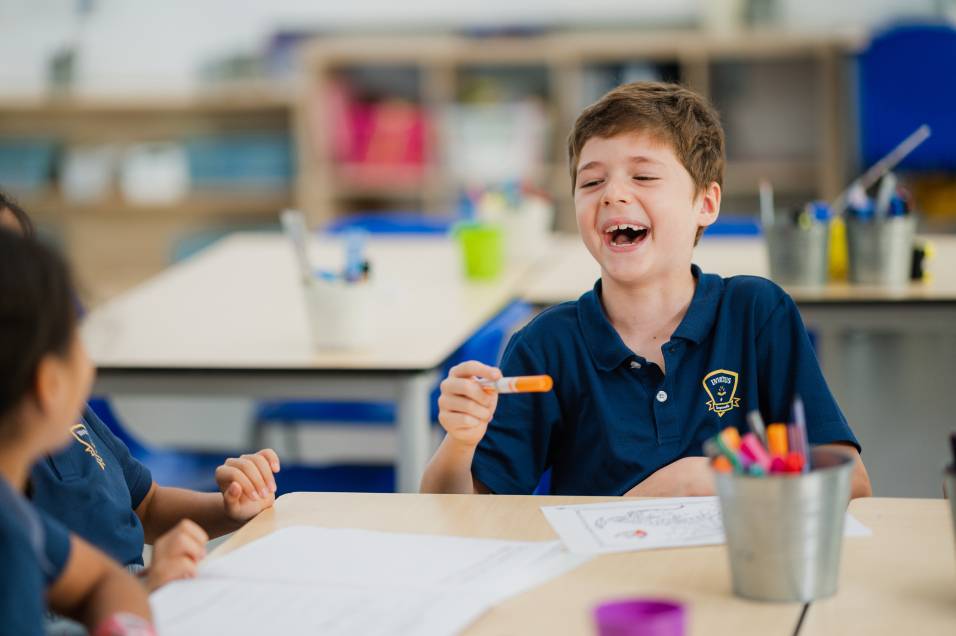
Thinking of enrolling your child in an international school? Get a glimpse into a typical school day and how it shapes confident, curious young minds.
The school gates open, and instead of rushing straight into textbooks and worksheets, children step into a space filled with curiosity, conversation, and discovery. For many parents exploring international primary schools in Singapore, one of the biggest questions is simple: What does a typical school day actually look like?
Understanding how your child will spend their day can make all the difference in choosing the right school. Beyond academics, it is about the environment, the experiences, and the way learning is brought to life.
Here is a closer look at what a day at an international school can look like, and what it could mean for your child.
A Warm Start to the Day
Mornings often begin with more than just attendance taking. Teachers greet students by name, setting a welcoming tone that helps children feel comfortable and ready to learn.
Instead of diving straight into lessons, many international schools incorporate short morning routines such as:
- Circle time or class discussions
- Sharing sessions about current events or personal experiences
- Setting goals for the day
This helps children develop confidence in speaking, listening, and expressing themselves from an early age.
Inquiry-Based Learning in Action
One of the defining features of international schools is their emphasis on inquiry-based learning. Rather than memorising facts, students are encouraged to ask questions, explore ideas, and make connections.
A lesson might start with a simple question like, “Why do plants need sunlight?” From there, students could:
- Conduct small experiments
- Work in groups to discuss observations
- Present their findings to the class
This approach nurtures curiosity and builds critical thinking skills that extend far beyond the classroom.
Core Subjects, Taught Differently
Subjects such as English, Mathematics, and Science remain central to the curriculum, but the way they are taught often feels more engaging and interactive.
For example:
- English lessons may include storytelling, role-playing, and creative writing
- Mathematics is often linked to real-life problem-solving scenarios
- Science involves hands-on experiments and exploration
Parents exploring international schools often notice that lessons are designed to make learning meaningful rather than repetitive.
How Technology Enhances Learning
In today’s classrooms, digital tools play an important role in supporting education. Understanding how technology enhances learning helps parents see how schools prepare students for a modern, connected world.
Students may use:
- Tablets or laptops for research and interactive activities
- Educational platforms for personalised learning
- Multimedia tools to present projects creatively
Technology is not used as a replacement for traditional teaching, but as a way to deepen understanding and engagement.
Collaborative and Social Learning
A typical school day includes plenty of opportunities for collaboration. Group work is common, allowing students to:
- Share ideas and perspectives
- Learn teamwork and communication skills
- Build empathy and respect for others
This social aspect of learning helps children grow not just academically, but emotionally and socially as well.
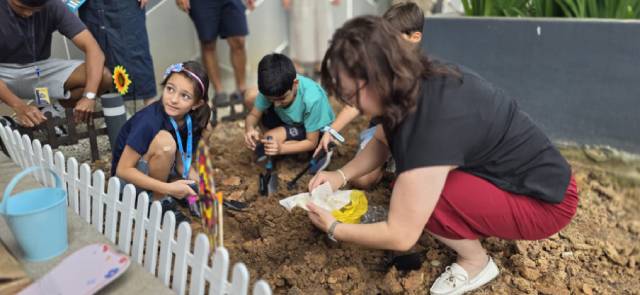
Recess and Outdoor Play
Break times are just as important as classroom learning. Students get the chance to:
- Play freely with friends
- Participate in physical activities
- Recharge and reset
Outdoor play supports physical development and contributes to overall well-being, helping children return to class more focused and energised.
Creative and Enrichment Activities
Beyond core subjects, international schools often provide a wide range of enrichment opportunities throughout the day.
These may include:
- Art and design
- Music and performance
- Physical education
- Language learning
Such activities allow children to explore their interests, discover new talents, and develop a well-rounded skill set.
A Focus on Individual Growth
Teachers in international schools pay close attention to each child’s progress. Smaller class sizes and personalised support mean that:
- Students receive guidance tailored to their needs
- Teachers can identify strengths and areas for improvement
- Learning is adapted to suit different paces and styles
This ensures that every child feels supported and valued in their learning journey.
Reflecting on the Day
As the school day comes to an end, students often take time to reflect on what they have learned. This could involve:
- Reviewing key takeaways
- Sharing highlights of the day
- Setting goals for tomorrow
Reflection helps children become more self-aware and take ownership of their learning.
More Than Just a School Day
When you look closely, a day at an international school is about much more than lessons and schedules. It is about nurturing curiosity, building confidence, and creating a positive relationship with learning.
For parents, this means knowing that your child is not just gaining knowledge, but also developing skills that will serve them for life.
Discover the Invictus Experience
If you are exploring options for your child’s education, experiencing a school day firsthand can provide valuable insight.
At Invictus International School, students are guided through an engaging, inquiry-driven curriculum that supports both academic achievement and personal growth.
Curious to see it in action? Book a tour today and discover how a thoughtfully designed school day can inspire your child to learn, explore, and thrive.
An Institution by Sing-Ed Corporation.
© 2026 Invictus International School. All Rights Reserved.